πŸ”

AZ-700 β€” questions

Page 6 of 9 Β· 172 total questions.

Topic 4 Β· Question 236

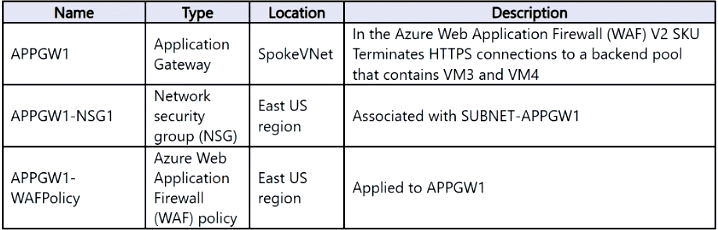
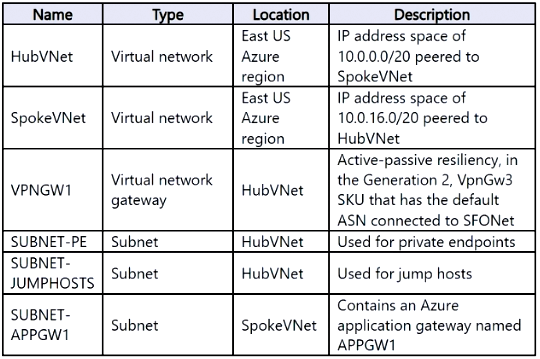
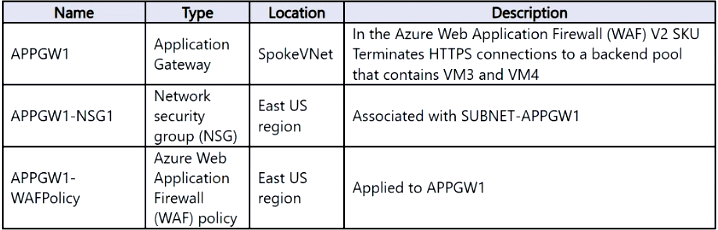
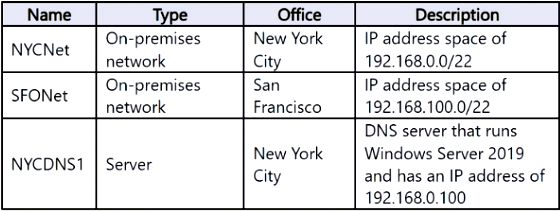
Case Study - This is a case study. Case studies are not timed separately. You can use as much exam time as you would like to complete each case. However, there may be additional case studies and sections on this exam. You must manage your time to ensure that you are able to complete all questions included on this exam in the time provided. To answer the questions included in a case study, you will need to reference information that is provided in the case study. Case studies might contain exhibits and other resources that provide more information about the scenario that is described in the case study. Each question is independent of the other questions in this case study. At the end of this case study, a review screen will appear. This screen allows you to review your answers and to make changes before you move to the next section of the exam. After you begin a new section, you cannot return to this section. To start the case study - To display the first question in this case study, click the Next button. Use the buttons in the left pane to explore the content of the case study before you answer the questions. Clicking these buttons displays information such as business requirements, existing environment, and problem statements. When you are ready to answer a question, click the Question button to return to the question. Overview - Proseware, Inc. is a financial services company that has a main office in New York City and a branch office in San Francisco. Existing Environment. Hybrid Environment Proseware has an on-premises Active Directory Domain Services (AD DS) forest named corp.proseware.com that syncs with a Microsoft Entra tenant named proseware.com. Proseware has an Azure subscription that is linked to proseware.com. Proseware has an internal certification authority (CA). Existing Environment. Network Infrastructure The offices contain the resources shown in the following table. NYCNet connects to Azure by using an ExpressRoute circuit. SFONet connects to Azure by using a Site-to-Site (S2S) VPN. Existing Environment. Azure Resources The Azure subscription contains the virtual networks and subnets shown in the following table. The subscription contains four virtual machines named VM1, VM2, VM3, and VM4. VM1 and VM2 host an app named App1. VM3 and VM4 host a web app named App2 that is accessed by using a FQDN of app2.proseware.com. Users access app2.proseware.com by using HTTP or HTTPS. VM1, VM2, and VM4 are connected to SpokeVNet. The subscription contains Application Gateway resources shown in the following table. The subscription contains an Azure Front Door Standard profile named FD1. FD1 contains a single origin group that targets APPGW1 by using the default endpoint name. HubVNet connects to NYCNet by using an ExpressRoute gateway named ERGW1. Planned Changes and Requirements. Planned Changes Proseware plans to implement the following changes: β€’ Deploy an Azure Private DNS Resolver named PRDNS1 to HubVNet and link PRDNS1 to SpokeVNet. β€’ Create a DNS forwarding ruleset named DNSRS1 and associate DNSRS1 with PRDNS1. β€’ Deploy Azure Virtual Network Manager and implement the following rules: - Allow inbound connections on TCP port 3389 from the on-premises networks to SUBNET-JUMPHOSTS. - Block inbound connections on TCP port 80 from the internet to SpokeVNet. β€’ Ensure that Azure Virtual Network Manager rules take precedence over conflicting NSG rules. β€’ Deploy two network virtual appliances (NVAs) named NVA1 and NVA2 to HubVNet. β€’ Deploy a gateway load balancer named LBGW1 to HubVNet. β€’ Configure LBGW1 to inspect traffic on TCP ports 443, 1433, and 1434 from LBS1 by using NVA1 and NVA2. β€’ Ensure that all the traffic to App2 is processed by using FD1. Planned Changes and Requirements. Connectivity requirements Proseware identifies the following connectivity requirements: β€’ Minimize the complexity of the Azure Virtual Network Manager deployment. β€’ Route traffic between NYCNet and SFONet via the ExpressRoute circuit and the S2S VPN. β€’ Ensure that remote users on Windows 11 devices can connect to HubVNet by using a Point-to-Site (P2S) VPN and their proseware.com credentials. Planned Changes and Requirements. Security requirements Proseware identifies the following security requirements: β€’ Whenever possible, use the internal CA. β€’ Ensure that all connections routed via APPGW1 use end-to-end encryption. β€’ Ensure that user connections to Azure-hosted apps use end-to-end encryption. β€’ Ensure that all inbound internet traffic to app2.proseware.com is routed via FD1. β€’ Prevent devices that connect to NYCNet from accessing Azure services that use private endpoints. β€’ Enable the virtual machines that connect to HubVNet and SpokeVNet to access Azure services that use private endpoints. Planned Changes and Requirements. General requirements Proseware identifies the following general requirements: β€’ Minimize the IP address space required to deploy platform-managed resources to the virtual networks. β€’ From SpokeVNet, resolve name resolution requests for the azure.proseware.com namespace and the corp.proseware.com namespace by using PRDNS1. β€’ Whenever possible, minimize administrative effort. You need to configure a custom rule for APPGW1-WAFPolicy to allow only connections that originate from FD1. The solution must support the planned changes. Which Match type and Match variable should you select?
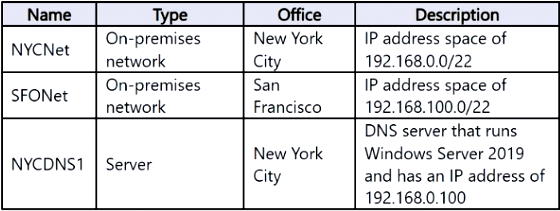
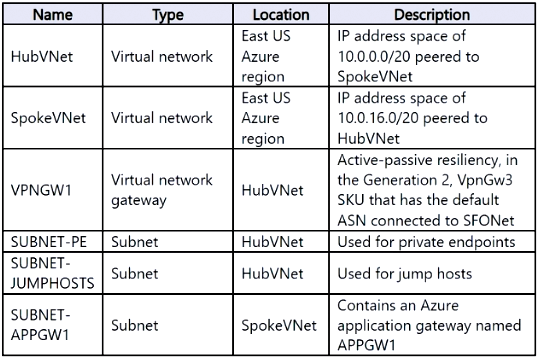
Exhibit 1 for question 236Exhibit 2 for question 236Exhibit 3 for question 236
  • AGeo location and RemoteAddr
  • BIP address and RemoteAddr (correct answer)
  • CString and RequestCookies
  • DString and RequestHeaders
Reveal answer & explanation
Correct answer: B

The correct answer is B. Option B: IP address and RemoteAddr.
Topic 4 Β· Question 237

You have an Azure virtual network that contains the subnets shown in the following table. You deploy an Azure firewall to AzureFirewallSubnet. You route all traffic from Subnet2 through the firewall. You need to ensure that all the hosts on Subnet2 can access an external site located at https://*.contoso.com. What should you do?

  • AIn a firewall policy, create a DNAT rule.
  • BCreate a network security group (NSG) and associate the NSG to Subnet2.
  • CIn a firewall policy, create a network rule.
  • DIn a firewall policy, create an application rule. (correct answer)
Reveal answer & explanation
Correct answer: D

The correct answer is D. Option D: In a firewall policy, create an application rule.

Topic 4 Β· Question 238

You have an Azure Web Application Firewall (WAF) policy in prevention mode that is associated to an Azure Front Door instance. You need to configure the policy to meet the following requirements: β€’ Log all connections from Australia. β€’ Deny all connections from New Zealand. β€’ Deny all further connections from a network of 131.107.100.0/24 if there are more than 100 connections during one minute. What is the minimum number of objects you should create?

  • Athree custom rules that each has one condition (correct answer)
  • Bone custom rule that has three conditions
  • Cone custom rule that has one condition
  • Done rule that has two conditions and another rule that has one condition
Reveal answer & explanation
Correct answer: A

The correct answer is A. Option A: three custom rules that each has one condition.

Topic 4 Β· Question 239 Β· Select all that apply

You have an Azure subscription that contains multiple virtual machines in the West US Azure region. You need to use Traffic Analytics. Which two resources should you create? Each correct answer presents part of the solution. (Choose two.) NOTE: Each correct answer selection is worth one point.

  • Aan Azure Monitor workbook
  • Ba Log Analytics workspace (correct answer)
  • Ca storage account (correct answer)
  • Dan Azure Sentinel workspace
  • Ean Azure Monitor data collection rule
Reveal answer & explanation
Correct answer: B, C

The correct answer is B, C. Option B: a Log Analytics workspace Option C: a storage account

Explanation

An Azure Storage Account is the container that groups blob, file, queue, and table storage with unified access control. Log Analytics queries collected logs and metrics to investigate and alert on resource behavior.

Topic 4 Β· Question 242

You have a hybrid environment that uses ExpressRoute to connect an on-premises network and Azure. You need to log the uptime and the latency of the connection periodically by using an Azure virtual machine and an on-premises virtual machine. What should you use?

  • AAzure Monitor
  • BIP flow verify
  • CConnection Monitor (correct answer)
  • DAzure Internet Analyzer
Reveal answer & explanation
Correct answer: C

The correct answer is C. Option C: Connection Monitor.

Topic 4 Β· Question 243

Case Study - This is a case study. Case studies are not timed separately. You can use as much exam time as you would like to complete each case. However, there may be additional case studies and sections on this exam. You must manage your time to ensure that you are able to complete all questions included on this exam in the time provided. To answer the questions included in a case study, you will need to reference information that is provided in the case study. Case studies might contain exhibits and other resources that provide more information about the scenario that is described in the case study. Each question is independent of the other questions in this case study. At the end of this case study, a review screen will appear. This screen allows you to review your answers and to make changes before you move to the next section of the exam. After you begin a new section, you cannot return to this section. To start the case study - To display the first question in this case study, click the Next button. Use the buttons in the left pane to explore the content of the case study before you answer the questions. Clicking these buttons displays information such as business requirements, existing environment, and problem statements. When you are ready to answer a question, click the Question button to return to the question. Overview - Proseware, Inc. is a financial services company that has a main office in New York City and a branch office in San Francisco. Existing Environment. Hybrid Environment Proseware has an on-premises Active Directory Domain Services (AD DS) forest named corp.proseware.com that syncs with a Microsoft Entra tenant named proseware.com. Proseware has an Azure subscription that is linked to proseware.com. Proseware has an internal certification authority (CA). Existing Environment. Network Infrastructure The offices contain the resources shown in the following table. NYCNet connects to Azure by using an ExpressRoute circuit. SFONet connects to Azure by using a Site-to-Site (S2S) VPN. Existing Environment. Azure Resources The Azure subscription contains the virtual networks and subnets shown in the following table. The subscription contains four virtual machines named VM1, VM2, VM3, and VM4. VM1 and VM2 host an app named App1. VM3 and VM4 host a web app named App2 that is accessed by using a FQDN of app2.proseware.com. Users access app2.proseware.com by using HTTP or HTTPS. VM1, VM2, and VM4 are connected to SpokeVNet. The subscription contains Application Gateway resources shown in the following table. The subscription contains an Azure Front Door Standard profile named FD1. FD1 contains a single origin group that targets APPGW1 by using the default endpoint name. HubVNet connects to NYCNet by using an ExpressRoute gateway named ERGW1. Planned Changes and Requirements. Planned Changes Proseware plans to implement the following changes: β€’ Deploy an Azure Private DNS Resolver named PRDNS1 to HubVNet and link PRDNS1 to SpokeVNet. β€’ Create a DNS forwarding ruleset named DNSRS1 and associate DNSRS1 with PRDNS1. β€’ Deploy Azure Virtual Network Manager and implement the following rules: - Allow inbound connections on TCP port 3389 from the on-premises networks to SUBNET-JUMPHOSTS. - Block inbound connections on TCP port 80 from the internet to SpokeVNet. β€’ Ensure that Azure Virtual Network Manager rules take precedence over conflicting NSG rules. β€’ Deploy two network virtual appliances (NVAs) named NVA1 and NVA2 to HubVNet. β€’ Deploy a gateway load balancer named LBGW1 to HubVNet. β€’ Configure LBGW1 to inspect traffic on TCP ports 443, 1433, and 1434 from LBS1 by using NVA1 and NVA2. β€’ Ensure that all the traffic to App2 is processed by using FD1. Planned Changes and Requirements. Connectivity requirements Proseware identifies the following connectivity requirements: β€’ Minimize the complexity of the Azure Virtual Network Manager deployment. β€’ Route traffic between NYCNet and SFONet via the ExpressRoute circuit and the S2S VPN. β€’ Ensure that remote users on Windows 11 devices can connect to HubVNet by using a Point-to-Site (P2S) VPN and their proseware.com credentials. Planned Changes and Requirements. Security requirements Proseware identifies the following security requirements: β€’ Whenever possible, use the internal CA. β€’ Ensure that all connections routed via APPGW1 use end-to-end encryption. β€’ Ensure that user connections to Azure-hosted apps use end-to-end encryption. β€’ Ensure that all inbound internet traffic to app2.proseware.com is routed via FD1. β€’ Prevent devices that connect to NYCNet from accessing Azure services that use private endpoints. β€’ Enable the virtual machines that connect to HubVNet and SpokeVNet to access Azure services that use private endpoints. Planned Changes and Requirements. General requirements Proseware identifies the following general requirements: β€’ Minimize the IP address space required to deploy platform-managed resources to the virtual networks. β€’ From SpokeVNet, resolve name resolution requests for the azure.proseware.com namespace and the corp.proseware.com namespace by using PRDNS1. β€’ Whenever possible, minimize administrative effort. You need to configure a security rule for APPGW1-NSG1. The solution must support the planned changes. Which service tag should you use?

Exhibit 1 for question 243Exhibit 2 for question 243Exhibit 3 for question 243
  • AAzureFrontDoor.Frontend
  • BAzureFrontDoor.Infra
  • CAzureFrontDoor.FirstParty
  • DAzureFrontDoor.Backend (correct answer)
Reveal answer & explanation
Correct answer: D

The correct answer is D. Option D: AzureFrontDoor.Backend.

Topic 4 Β· Question 245

You have an Azure virtual network that contains a subnet named Subnet1. Subnet1 is associated to a network security group (NSG) named NSG1. NSG1 blocks all outbound traffic that is not allowed explicitly. Subnet1 contains virtual machines that must communicate with the Azure Cosmos DB service. You need to create an outbound security rule in NSG1 to enable the virtual machines to connect to Azure Cosmos DB. What should you include in the solution?

  • Aa service tag (correct answer)
  • Ba service endpoint policy
  • Ca subnet delegation
  • Dan application security group
Reveal answer & explanation
Correct answer: A

The correct answer is A. Option A: a service tag.

Topic 4 Β· Question 246

Your company has offices in Montreal, Seattle, and Paris. The outbound traffic from each office originates from a specific public IP address. You create an Azure Front Door instance named FD1 that has Azure Web Application Firewall (WAF) enabled. You configure a WAF policy named Policy1 that has a rule named Rule1. Rule1 applies a rate limit of 100 requests for traffic that originates from the office in Montreal. You need to apply a rate limit of 100 requests for traffic that originates from each office. What should you do?

  • AModify the rate limit threshold of Rule1.
  • BCreate two additional associations.
  • CModify the conditions of Rule1. (correct answer)
  • DModify the rule type of Rule1.
Reveal answer & explanation
Correct answer: C

The correct answer is C. Option C: Modify the conditions of Rule1.

Topic 4 Β· Question 247 Β· Select all that apply

You have an Azure virtual network named Vnet1. You need to ensure that the virtual machines in Vnet1 can access only the Azure SQL resources in the East US Azure region. The virtual machines must be prevented from accessing any Azure Storage resources. Which two outbound network security group (NSG) rules should you create? Each correct answer presents part of the solution. NOTE: Each correct selection is worth one point.

  • Aa deny rule that has a source of VirtualNetwork and a destination of Sql
  • Ban allow rule that has the IP address range of Vnet1 as the source and destination of Sql.EastUS (correct answer)
  • Ca deny rule that has a source of VirtualNetwork and a destination of 168.63.129.0/24
  • Da deny rule that has the IP address range of Vnet1 as the source and destination of Storage (correct answer)
Reveal answer & explanation
Correct answer: B, D

The correct answer is B, D. Option B: an allow rule that has the IP address range of Vnet1 as the source and destination of Sql.EastUS Option D: a deny rule that has the IP address range of Vnet1 as the source and destination of Storage.

Topic 4 Β· Question 248

Note: This question is part of a series of questions that present the same scenario. Each question in the series contains a unique solution that might meet the stated goals. Some question sets might have more than one correct solution, while others might not have a correct solution. After you answer a question in this section, you will NOT be able to return to it. As a result, these questions will not appear in the review screen. You have an Azure subscription that contains the following resources: β€’ A virtual network named Vnet1 β€’ A subnet named Subnet1 in Vnet1 β€’ A virtual machine named VM1 that connects to Subnet1 β€’ Three storage accounts named storage1, storage2, and storage3 You need to ensure that VM1 can access storage1. VM1 must be prevented from accessing any other storage accounts. Solution: You configure the firewall on storage1 to only accept connections from Vnet1. Does this meet the goal?

  • AYes
  • BNo (correct answer)
Reveal answer & explanation
Correct answer: B

The correct answer is B. Option B: No.

Topic 4 Β· Question 249

Note: This question is part of a series of questions that present the same scenario. Each question in the series contains a unique solution that might meet the stated goals. Some question sets might have more than one correct solution, while others might not have a correct solution. After you answer a question in this section, you will NOT be able to return to it. As a result, these questions will not appear in the review screen. You have an Azure subscription that contains the following resources: β€’ A virtual network named Vnet1 β€’ A subnet named Subnet1 in Vnet1 β€’ A virtual machine named VM1 that connects to Subnet1 β€’ Three storage accounts named storage1, storage2, and storage3 You need to ensure that VM1 can access storage1. VM1 must be prevented from accessing any other storage accounts. Solution: You create a network security group (NSG) and associate the NSG to Subnet1. Does this meet the goal?

  • AYes
  • BNo (correct answer)
Reveal answer & explanation
Correct answer: B

The correct answer is B. Option B: No.

Topic 4 Β· Question 250

Note: This question is part of a series of questions that present the same scenario. Each question in the series contains a unique solution that might meet the stated goals. Some question sets might have more than one correct solution, while others might not have a correct solution. After you answer a question in this section, you will NOT be able to return to it. As a result, these questions will not appear in the review screen. You have an Azure subscription that contains the following resources: β€’ A virtual network named Vnet1 A subnet named Subnet1 in Vnet1 - β€’ A virtual machine named VM1 that connects to Subnet1 β€’ Three storage accounts named storage1, storage2, and storage3 You need to ensure that VM1 can access storage1. VM1 must be prevented from accessing any other storage accounts. Solution: You create a network security group (NSG). You configure a service tag for Microsoft.Storage and link the tag to Subnet1. Does this meet the goal?

  • AYes
  • BNo (correct answer)
Reveal answer & explanation
Correct answer: B

The correct answer is B. Option B: No.

Topic 4 Β· Question 251

You need to use Traffic Analytics to monitor the usage of applications deployed to Azure virtual machines. Which Azure Network Watcher feature should you implement first?

  • ANSG flow logs (correct answer)
  • BIP flow verify
  • CConnection monitor
  • DPacket capture
Reveal answer & explanation
Correct answer: A

The correct answer is A. Option A: NSG flow logs

Explanation

A Network Security Group (NSG) applies allow/deny rules to control traffic at the subnet or NIC level.

Topic 4 Β· Question 254

You have the Azure virtual networks shown in the following table. You have the Azure resources shown in the following table. You need to check latency between the resources by using connection monitors in Azure Network Watcher. What is the minimum number of connection monitors that you must create?

  • A1
  • B2 (correct answer)
  • C3
  • D4
  • E5
Reveal answer & explanation
Correct answer: B

The correct answer is B. Option B: 2.

Topic 4 Β· Question 255

You have an Azure subscription that contains a user named Admin1 and a resource group named RG1. RG1 contains an Azure Network Watcher instance named NW1. You need to ensure that Admin1 can place a lock on NW1. The solution must use the principle of least privilege. Which role should you assign to Admin1?

  • AUser Access Administrator (correct answer)
  • BResource Policy Contributor
  • CNetwork Contributor
  • DMonitoring Contributor
Reveal answer & explanation
Correct answer: A

The correct answer is A. Option A: User Access Administrator.

Topic 4 Β· Question 256

You have a network security group named NSG1. You need to enable network security group (NS) flow logs for NSG1. The solution must support retention policies. What should you create first?

  • AA standard general-purpose v2 Azure Storage account (correct answer)
  • BAn Azure Log Analytics workspace
  • CA standard general-purpose v1 Azure Storage account
  • DA premium Block blobs Azure Storage account
Reveal answer & explanation
Correct answer: A

The correct answer is A. Option A: A standard general-purpose v2 Azure Storage account

Explanation

An Azure Storage Account is the container that groups blob, file, queue, and table storage with unified access control.

Topic 4 Β· Question 258

You have an Azure subscription that contains a virtual network named Vnet1. Vnet1 contains a virtual machine named VM1 and an Azure firewall named FW1. You have an Azure Firewall Policy named FP1 that is associated to FW1. You need to ensure that RDP requests to the public IP address of FW1 route to VM1. What should you configure on FP1?

  • Aa network rule
  • BURL filtering
  • Ca DNAT rule (correct answer)
  • Dan application rule
Reveal answer & explanation
Correct answer: C

The correct answer is C. Option C: a DNAT rule.

Topic 4 Β· Question 263

You have an Azure subscription that contains a virtual network named Vnet1. Vnet1 contains 20 subnets and 500 virtual machines. Each subnet contains a virtual machine that runs network monitoring software. You have a network security group (NSG) named NSG1 associated to each subnet. When a new subnet is created in Vnet1 an automated process creates an additional network monitoring virtual machine in the subnet and links the subnet to NSG1. You need to create an inbound security rule in NSG1 that will allow connections to the network monitoring virtual machines from an IP address of 131.107.1.15. The solution must meet the following requirements: β€’ Ensure that only the monitoring virtual machines receive a connection from 131.1071.15. β€’ Minimize changes to NSG1 when a new subnet is created. What should you use as the destination in the inbound security rule?

  • Aan application security group (correct answer)
  • Ba service tag
  • Ca virtual network
  • Dan IP address
Reveal answer & explanation
Correct answer: A

The correct answer is A. Option A: an application security group.

Topic 4 Β· Question 264

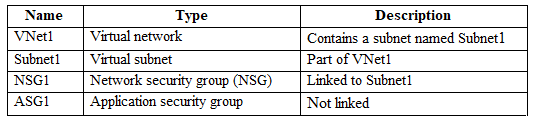
You have an Azure subscription that contains the resources shown in the following table. Subnet1 contains three virtual machines that host an app named App1. App1 is accessed by using the SFTP protocol. From NSG1, you configure an inbound security rule named Rule2 that allows inbound SFTP connections to ASG1. You need to ensure that the inbound SFTP connections are managed by using ASG1. The solution must minimize administrative effort. What should you do?

Exhibit 1 for question 264
  • AFrom NSG1, modify the priority of Rule2.
  • BFrom each virtual machine, associate the network interface to ASG1. (correct answer)
  • CFrom Subnet1, create a subnet delegation.
  • DFrom ASG1, modify the role assignments.
Reveal answer & explanation
Correct answer: B

The correct answer is B. Option B: From each virtual machine, associate the network interface to ASG1.

Explanation

An Azure Virtual Machine provides full control of the OS when you need to run custom or legacy workloads.

Topic 4 Β· Question 265 Β· Select all that apply

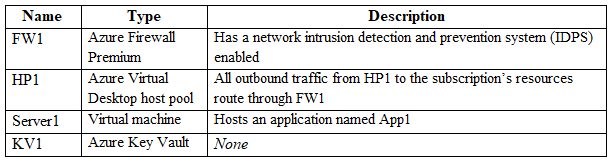
You have an Azure subscription that contains the resources shown in the following table. Users on HP1 connect to App1 by using a URL of https://app1.contoso.com. You need to ensure that the IDPS on FW1 can identify security threats in the connections from HP1 to Server1. Which two actions should you perform? Each correct answer presents part of the solution. NOTE: Each correct selection is worth one point.

Exhibit 1 for question 265
  • AEnable TLS inspection for FW1. (correct answer)
  • BImport a server certificate to KV1. (correct answer)
  • CEnable threat intelligence for FW1.
  • DAdd an application group to HP1.
  • EAdd a secured virtual network to FW1.
Reveal answer & explanation
Correct answer: A, B

The correct answer is A, B. Option A: Enable TLS inspection for FW1. Option B: Import a server certificate to KV1.

Showing questions 101–120 of 172 Β· Page 6 of 9