πŸ”

AZ-700 β€” questions

Page 3 of 9 Β· 172 total questions.

Topic 2 Β· Question 93

You are planning the IP addressing for the subnets in Azure virtual networks. Which type of resource requires IP addresses in the subnets?

  • Ainternal load balancers (correct answer)
  • BAzure DDoS Protection for virtual networks
  • Cservice endpoint policies
  • Dservice endpoints
Reveal answer & explanation
Correct answer: A

The correct answer is A. Option A: internal load balancers

Explanation

Azure Load Balancer distributes layer-4 traffic across healthy backends in a region for availability.

Topic 2 Β· Question 111

You are planning the IP addressing for the subnets in Azure virtual networks. Which type of resource requires IP addresses in the subnets?

  • Astorage account
  • Binternal load balancers (correct answer)
  • Cservice endpoints
  • Dvirtual network peering
Reveal answer & explanation
Correct answer: B

The correct answer is B. Option B: internal load balancers

Explanation

Azure Load Balancer distributes layer-4 traffic across healthy backends in a region for availability.

Topic 2 Β· Question 112

You have the on-premises networks shown in the following table. You have an Azure subscription that contains an Azure virtual WAN named VWAN1 and a virtual network named VNet1. VWAN is connected to the on-premises networks and VNet1 in a full mesh topology. The virtual hub routing preference for VWAN1 is AS Path. You need to route traffic from VNet1 to 10.61.1.5. Which path will be used?

Exhibit 1 for question 112
  • Athe VPN connection to Branch1
  • Bthe VPN connection to Branch2
  • Cthe ExpressRoute connection to Branch2
  • Dthe ExpressRoute connection to Branch3 (correct answer)
Reveal answer & explanation
Correct answer: D

The correct answer is D. Option D: the ExpressRoute connection to Branch3

Explanation

Azure ExpressRoute provides a dedicated, private connection between on-premises and Azure that bypasses the internet.

Topic 2 Β· Question 114

You have an Azure subscription that contains a virtual network named VNet1. You deploy several web apps and configure the apps to use private endpoints on VNet1. You need to identify which DNS records the web apps registered automatically. Where will the records be created?

  • Aan Azure DNS zone named privatelink.azurewebsites.net
  • Ban Azure Private DNS zone named azurewebsites.net
  • Can Azure Private DNS zone named privatelink.azurewebsites.net (correct answer)
  • Dan Azure DNS zone named azurewebsites.net
Reveal answer & explanation
Correct answer: C

The correct answer is C. Option C: an Azure Private DNS zone named privatelink.azurewebsites.net.

Topic 2 Β· Question 116

You are planning the IP addressing for the subnets in Azure virtual networks. Which type of resource requires IP addresses in the subnets?

  • Astorage account
  • Binternal load balancers (correct answer)
  • Cservice endpoints
  • Dservice endpoint policies
Reveal answer & explanation
Correct answer: B

The correct answer is B. Option B: internal load balancers

Explanation

Azure Load Balancer distributes layer-4 traffic across healthy backends in a region for availability.

Topic 2 Β· Question 117

You have the Azure virtual networks shown in the following table. You deploy Azure Firewall to Vnet3. You need to ensure that the traffic from Subnet1-1 to Subnet2-1 passes through the firewall. What should you configure?

Exhibit 1 for question 117
  • Apeering links between Vnet1 and Vnet2
  • Ba route table associated to Subnet1-1 and Subnet2-1 (correct answer)
  • Can Azure private DNS zone
  • Da route table associated to AzureFirewallSubnet
Reveal answer & explanation
Correct answer: B

The correct answer is B. Option B: a route table associated to Subnet1-1 and Subnet2-1.

Topic 2 Β· Question 118

You plan to implement an Azure virtual network that will contain 10 virtual subnets. The subnets will use IPv6 addresses. Each subnet will host up to 200 load-balanced virtual machines. You need to recommend which subnet mask size to use for the virtual subnets. What should you recommend?

  • A/64 (correct answer)
  • B/120
  • C/48
  • D/24
Reveal answer & explanation
Correct answer: A

The correct answer is A. Option A: /64.

Topic 2 Β· Question 120

You are planning the IP addressing for the subnets in Azure virtual networks. Which type of resource requires IP addresses in the subnets?

  • AAzure Virtual Network NAT
  • Bservice endpoint policies
  • Cinternal load balancers (correct answer)
  • Dvirtual network peering
Reveal answer & explanation
Correct answer: C

An internal (private) load balancer requires a private IP address from the subnet's address range for its frontend. Azure Virtual Network NAT, service endpoint policies, and virtual network peering do not consume IP addresses from the subnet.

Topic 2 Β· Question 122

You have an Azure subscription that contains a virtual network named VNet1. VNet1 has a subnet mask of/24. You plan to implement an Azure application gateway that will have the following configurations: β€’ Public endpoints: 1 β€’ Private endpoints: 1 β€’ Minimum instances: 1 β€’ Maximum instances: 10 You need to configure the address space for the subnet of the application gateway. The solution must minimize the number of IP addresses allocated to the application gateway subnet. What is the minimum number of assignable IP addresses required?

  • A1
  • B2
  • C11 (correct answer)
  • D12
  • E20
Reveal answer & explanation
Correct answer: C

The correct answer is C. Option C: 11.

Topic 2 Β· Question 132

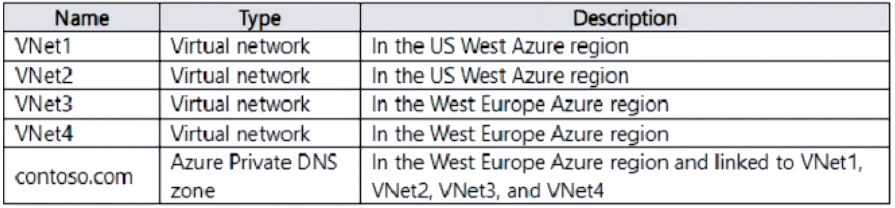
You have an on-premises DNS server named Server that hosts a primary DNS zone named fabrikam.com. You have an Azure subscription that contains the resources shown in the following table. Users on the on-premises network access resources on all the virtual networks by using a Site-to-Site (S2S) VPN. You need to deploy an Azure DNS Private Resolver solution that meets the following requirements: β€’ Resources connected to the virtual networks must be able to resolve DNS names for fabrikam.com. β€’ Server1 must be able to resolve the DNS names of the resources in contoso.com. β€’ The solution must minimize costs and administrative effort. What is the minimum number of resolvers you should deploy?

Exhibit 1 for question 132
  • A1
  • B2 (correct answer)
  • C3
  • D4
Reveal answer & explanation
Correct answer: B

The correct answer is B. Option B: 2 This option delivers the requirement at the lowest cost.

Topic 2 Β· Question 134

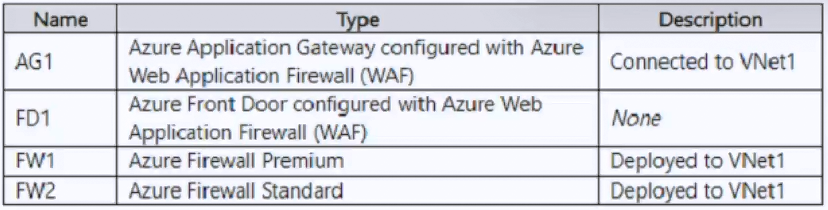
You have an Azure subscription that contains a virtual network named VNet1 and the resources shown in the following table. You need to implement a solution for the traffic originating from VNet1. The solution must meet the following requirements: β€’ Perform transparent proxying to external web servers. β€’ Inspect all outbound TLS traffic. β€’ Minimize costs. Which resource should you include in the solution?

Exhibit 1 for question 134
  • AFW2
  • BAG1
  • CFD1
  • DFW1 (correct answer)
Reveal answer & explanation
Correct answer: D

The correct answer is D. Option D: FW1 This option delivers the requirement at the lowest cost.

Topic 2 Β· Question 137

You have an Azure subscription. The subscription contains a locally-redundant storage (LRS) account named storage1 that is deployed to the US East Azure region and has a Microsoft.Storage service endpoint. You set Redundancy for storage1 to Read-access geo-redundant storage (RA-GRS). You need to ensure that the contents of storage1 will be accessible by using a service endpoint in a paired region. The solution must minimize administrative effort. What should you do first?

  • ACreate an object replication rule for storage.
  • BDelete the existing service endpoint.
  • CFrom storage1, select Secure transfer required.
  • DCreate a service endpoint policy. (correct answer)
Reveal answer & explanation
Correct answer: D

The correct answer is D. Option D: Create a service endpoint policy.

Explanation

A Virtual Network Service Endpoint secures Azure service access to specific subnets over the Azure backbone.

Topic 2 Β· Question 143

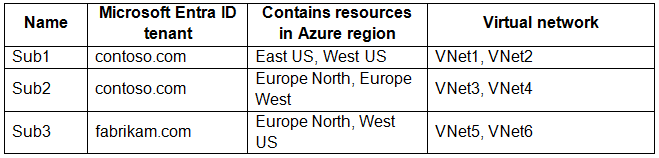
You have the Azure subscriptions shown in the following table. Each virtual network contains 20 internet-accessible resources that are assigned public IP addresses. You need to implement Azure DDoS Network Protection to protect the resources. The solution must minimize costs. What is the minimum number of DDoS Network Protection plans you should deploy?

Exhibit 1 for question 143
  • A1
  • B2 (correct answer)
  • C3
  • D6
Reveal answer & explanation
Correct answer: B

The correct answer is B. Option B: 2 This option delivers the requirement at the lowest cost.

Topic 2 Β· Question 145

You have an Azure subscription that contains 100 network security groups (NSGs). You need to ensure that you log the application of specific NSG rules. Which type of log should you configure?

  • Aflow log (correct answer)
  • Bactivity log
  • CAzure resource log
  • Daudit log
Reveal answer & explanation
Correct answer: A

The correct answer is A. Option A: flow log.

Topic 2 Β· Question 148

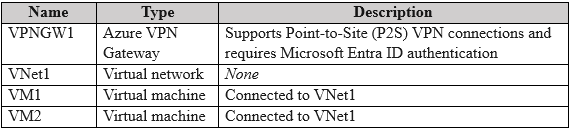
Your company has a remote office that contains a macOS device named Device1. Device1 has an IKEv2 VPN client installed. You have an Azure subscription that contains the resources shown in the following table. You need to ensure that Device1 can access the resources on VNet1 by using the VPN connections of VPNGW1. The solution must minimize administrative effort. What should you do first?

Exhibit 1 for question 148
  • ATo VNet1, deploy a virtual machine that contains a RADIUS server.
  • BOn Device1, install the OpenVPN client. (correct answer)
  • COn Device1, add an X.509 certificate.
  • DFrom Devices in the Microsoft Entra admin center, configure the Device settings.
Reveal answer & explanation
Correct answer: B

The correct answer is B. Option B: On Device1, install the OpenVPN client.

Topic 2 Β· Question 152

You have an on-premises datacenter in Seattle. You have an Azure subscription that contains an Azure Network Watcher resource in the West US 2 Azure region. You need to document network latency between the on-premises datacenter and the West US 2 region and between the on-premises datacenter and the East US 2 public Azure region. The solution must minimize administrative effort. What should you do first?

  • ARun the Get-AzNetworkWatcherConnectionMonitor cmdlet.
  • BRun the Get-AzNetworkWatcherReachabilityProvidersList cmdlet.
  • CCreate a Network Watcher resource in the East US 2 region.
  • DCreate a Connection Monitor resource in the West US 2 region. (correct answer)
Reveal answer & explanation
Correct answer: D

The correct answer is D. Option D: Create a Connection Monitor resource in the West US 2 region.

Topic 2 Β· Question 154

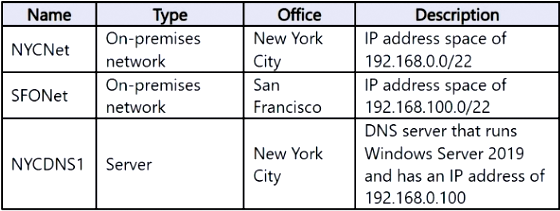
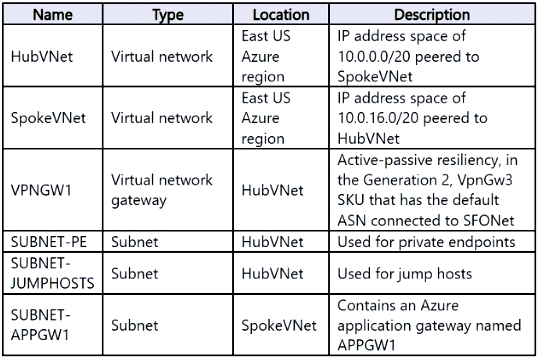
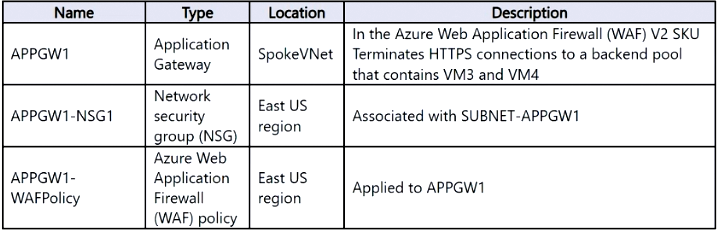
Case Study - This is a case study. Case studies are not timed separately. You can use as much exam time as you would like to complete each case. However, there may be additional case studies and sections on this exam. You must manage your time to ensure that you are able to complete all questions included on this exam in the time provided. To answer the questions included in a case study, you will need to reference information that is provided in the case study. Case studies might contain exhibits and other resources that provide more information about the scenario that is described in the case study. Each question is independent of the other questions in this case study. At the end of this case study, a review screen will appear. This screen allows you to review your answers and to make changes before you move to the next section of the exam. After you begin a new section, you cannot return to this section. To start the case study - To display the first question in this case study, click the Next button. Use the buttons in the left pane to explore the content of the case study before you answer the questions. Clicking these buttons displays information such as business requirements, existing environment, and problem statements. When you are ready to answer a question, click the Question button to return to the question. Overview - Proseware, Inc. is a financial services company that has a main office in New York City and a branch office in San Francisco. Existing Environment. Hybrid Environment Proseware has an on-premises Active Directory Domain Services (AD DS) forest named corp.proseware.com that syncs with a Microsoft Entra tenant named proseware.com. Proseware has an Azure subscription that is linked to proseware.com. Proseware has an internal certification authority (CA). Existing Environment. Network Infrastructure The offices contain the resources shown in the following table. NYCNet connects to Azure by using an ExpressRoute circuit. SFONet connects to Azure by using a Site-to-Site (S2S) VPN. Existing Environment. Azure Resources The Azure subscription contains the virtual networks and subnets shown in the following table. The subscription contains four virtual machines named VM1, VM2, VM3, and VM4. VM1 and VM2 host an app named App1. VM3 and VM4 host a web app named App2 that is accessed by using a FQDN of app2.proseware.com. Users access app2.proseware.com by using HTTP or HTTPS. VM1, VM2, and VM4 are connected to SpokeVNet. The subscription contains Application Gateway resources shown in the following table. The subscription contains an Azure Front Door Standard profile named FD1. FD1 contains a single origin group that targets APPGW1 by using the default endpoint name. HubVNet connects to NYCNet by using an ExpressRoute gateway named ERGW1. Planned Changes and Requirements. Planned Changes Proseware plans to implement the following changes: β€’ Deploy an Azure Private DNS Resolver named PRDNS1 to HubVNet and link PRDNS1 to SpokeVNet. β€’ Create a DNS forwarding ruleset named DNSRS1 and associate DNSRS1 with PRDNS1. β€’ Deploy Azure Virtual Network Manager and implement the following rules: - Allow inbound connections on TCP port 3389 from the on-premises networks to SUBNET-JUMPHOSTS. - Block inbound connections on TCP port 80 from the internet to SpokeVNet. β€’ Ensure that Azure Virtual Network Manager rules take precedence over conflicting NSG rules. β€’ Deploy two network virtual appliances (NVAs) named NVA1 and NVA2 to HubVNet. β€’ Deploy a gateway load balancer named LBGW1 to HubVNet. β€’ Configure LBGW1 to inspect traffic on TCP ports 443, 1433, and 1434 from LBS1 by using NVA1 and NVA2. β€’ Ensure that all the traffic to App2 is processed by using FD1. Planned Changes and Requirements. Connectivity requirements Proseware identifies the following connectivity requirements: β€’ Minimize the complexity of the Azure Virtual Network Manager deployment. β€’ Route traffic between NYCNet and SFONet via the ExpressRoute circuit and the S2S VPN. β€’ Ensure that remote users on Windows 11 devices can connect to HubVNet by using a Point-to-Site (P2S) VPN and their proseware.com credentials. Planned Changes and Requirements. Security requirements Proseware identifies the following security requirements: β€’ Whenever possible, use the internal CA. β€’ Ensure that all connections routed via APPGW1 use end-to-end encryption. β€’ Ensure that user connections to Azure-hosted apps use end-to-end encryption. β€’ Ensure that all inbound internet traffic to app2.proseware.com is routed via FD1. β€’ Prevent devices that connect to NYCNet from accessing Azure services that use private endpoints. β€’ Enable the virtual machines that connect to HubVNet and SpokeVNet to access Azure services that use private endpoints. Planned Changes and Requirements. General requirements Proseware identifies the following general requirements: β€’ Minimize the IP address space required to deploy platform-managed resources to the virtual networks. β€’ From SpokeVNet, resolve name resolution requests for the azure.proseware.com namespace and the corp.proseware.com namespace by using PRDNS1. β€’ Whenever possible, minimize administrative effort. You need to configure APPGW1 to support end-to-end encryption. The solution must meet the security requirements. What should you do?
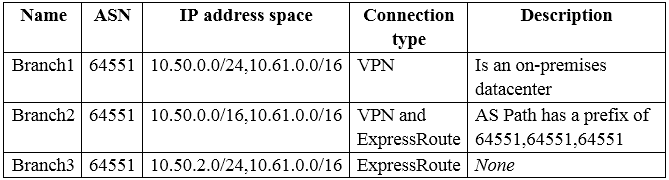
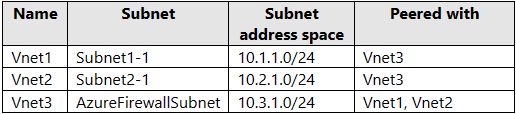
Exhibit 1 for question 154Exhibit 2 for question 154Exhibit 3 for question 154
  • AFrom the SSL settings, upload a TLS client certificate that is issued by the internal root CA and includes the full certificate chain.
  • BFrom the Backend settings, upload the internal root CA certificate. (correct answer)
  • CFrom the SSL settings, upload a TLS client certificate that is issued by the internal root CA.
  • DFrom the Backend settings, upload a wildcard TLS certificate that has a private key issued by the internal root CA.
Reveal answer & explanation
Correct answer: B

The correct answer is B. Option B: From the Backend settings, upload the internal root CA certificate.

Topic 2 Β· Question 158

You have an Azure subscription that contains a virtual machine named VM1, a virtual network interface card (NIC) named NIC1, and a Basic SKU public IP address named IP1. NIC1 is attached to VM1. IP1 is associated to NIC1. You need to upgrade IP1 to the Standard SKU. What should you do first?

  • ACreate a new NIC for VMI.
  • BDisassociate IP1 from NIC1. (correct answer)
  • CDetach NIC1 from VM1.
  • DStop vM1.
Reveal answer & explanation
Correct answer: B

The correct answer is B. Option B: Disassociate IP1 from NIC1.

Topic 2 Β· Question 159

You have an Azure subscription that contains the resources shown in the following table. You test DDoSplan1 by running a simulation that targets IP1. You need to review the DDoS Protection mitigation reports. What should you use?

Exhibit 1 for question 159
  • ADDos protection plan in the Azure portal
  • BLog Analytics (correct answer)
  • CMicrosoft Defender for Cloud
  • DAzure Monitor Network Insights
Reveal answer & explanation
Correct answer: B

The correct answer is B. Option B: Log Analytics

Explanation

Log Analytics queries collected logs and metrics to investigate and alert on resource behavior.

Topic 2 Β· Question 164

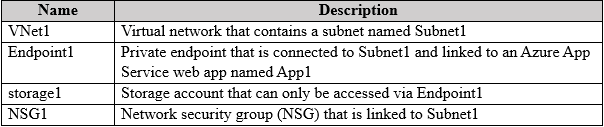
You have an Azure subscription that contains the resources shown in the following table. You need to control access to storage1 by using NSG1. What should you configure first?

Exhibit 1 for question 164
  • Athe Azure Private Link service
  • Ban application security group
  • Ca private endpoint network policy (correct answer)
  • Da service endpoint
Reveal answer & explanation
Correct answer: C

The correct answer is C. Option C: a private endpoint network policy

Explanation

A Private Endpoint gives private, in-VNet connectivity to an Azure service, keeping traffic off the public internet.

Showing questions 41–60 of 172 Β· Page 3 of 9