πŸ”

DEA-C01 β€” questions

Page 4 of 16 Β· 313 total questions.

Topic 1 Β· Question 61 Β· Select all that apply

A company uses Amazon RDS for MySQL as the database for a critical application. The database workload is mostly writes, with a small number of reads. A data engineer notices that the CPU utilization of the DB instance is very high. The high CPU utilization is slowing down the application. The data engineer must reduce the CPU utilization of the DB Instance. Which actions should the data engineer take to meet this requirement? (Choose two.)

  • AUse the Performance Insights feature of Amazon RDS to identify queries that have high CPU utilization. Optimize the problematic queries. (correct answer)
  • BModify the database schema to include additional tables and indexes.
  • CReboot the RDS DB instance once each week.
  • DUpgrade to a larger instance size. (correct answer)
  • EImplement caching to reduce the database query load.
Reveal answer & explanation
Correct answer: A, D

The correct answer is A, D. Option A: Use the Performance Insights feature of Amazon RDS to identify queries that have high CPU utilization. Optimize the problematic queries. Option D: Upgrade to a larger instance size.

Explanation

Amazon RDS is a managed relational database that handles patching, backups and failover.
Topic 1 Β· Question 62

A company has used an Amazon Redshift table that is named Orders for 6 months. The company performs weekly updates and deletes on the table. The table has an interleaved sort key on a column that contains AWS Regions. The company wants to reclaim disk space so that the company will not run out of storage space. The company also wants to analyze the sort key column. Which Amazon Redshift command will meet these requirements?

  • AVACUUM FULL Orders
  • BVACUUM DELETE ONLY Orders
  • CVACUUM REINDEX Orders (correct answer)
  • DVACUUM SORT ONLY Orders
Reveal answer & explanation
Correct answer: C

The correct answer is C. Option C: VACUUM REINDEX Orders.

Topic 1 Β· Question 63

A manufacturing company wants to collect data from sensors. A data engineer needs to implement a solution that ingests sensor data in near real time. The solution must store the data to a persistent data store. The solution must store the data in nested JSON format. The company must have the ability to query from the data store with a latency of less than 10 milliseconds. Which solution will meet these requirements with the LEAST operational overhead?

  • AUse a self-hosted Apache Kafka cluster to capture the sensor data. Store the data in Amazon S3 for querying.
  • BUse AWS Lambda to process the sensor data. Store the data in Amazon S3 for querying.
  • CUse Amazon Kinesis Data Streams to capture the sensor data. Store the data in Amazon DynamoDB for querying. (correct answer)
  • DUse Amazon Simple Queue Service (Amazon SQS) to buffer incoming sensor data. Use AWS Glue to store the data in Amazon RDS for querying.
Reveal answer & explanation
Correct answer: C

The correct answer is C. Option C: Use Amazon Kinesis Data Streams to capture the sensor data. Store the data in Amazon DynamoDB for querying.

Explanation

Amazon DynamoDB is a fully managed, serverless NoSQL database with single-digit millisecond latency and automatic scaling. Kinesis Data Streams ingests and processes high-volume real-time streaming data. Amazon Kinesis ingests and processes real-time streaming data at scale.

Topic 1 Β· Question 64

A company stores data in a data lake that is in Amazon S3. Some data that the company stores in the data lake contains personally identifiable information (PII). Multiple user groups need to access the raw data. The company must ensure that user groups can access only the PII that they require. Which solution will meet these requirements with the LEAST effort?

  • AUse Amazon Athena to query the data. Set up AWS Lake Formation and create data filters to establish levels of access for the company's IAM roles. Assign each user to the IAM role that matches the user's PII access requirements. (correct answer)
  • BUse Amazon QuickSight to access the data. Use column-level security features in QuickSight to limit the PII that users can retrieve from Amazon S3 by using Amazon Athena. Define QuickSight access levels based on the PII access requirements of the users.
  • CBuild a custom query builder UI that will run Athena queries in the background to access the data. Create user groups in Amazon Cognito. Assign access levels to the user groups based on the PII access requirements of the users.
  • DCreate IAM roles that have different levels of granular access. Assign the IAM roles to IAM user groups. Use an identity-based policy to assign access levels to user groups at the column level.
Reveal answer & explanation
Correct answer: A

The correct answer is A. Option A: Use Amazon Athena to query the data. Set up AWS Lake Formation and create data filters to establish levels of access for the company's IAM roles. Assign each user to the IAM role that matches the user's PII access req...

Explanation

Amazon Athena runs serverless SQL queries directly on data in Amazon S3 with no infrastructure to manage. AWS Lake Formation builds and secures data lakes quickly. An IAM role grants temporary, least-privilege permissions to AWS resources without long-term credentials.

Topic 1 Β· Question 65 Β· Select all that apply

A data engineer must build an extract, transform, and load (ETL) pipeline to process and load data from 10 source systems into 10 tables that are in an Amazon Redshift database. All the source systems generate .csv, JSON, or Apache Parquet files every 15 minutes. The source systems all deliver files into one Amazon S3 bucket. The file sizes range from 10 MB to 20 GB. The ETL pipeline must function correctly despite changes to the data schema. Which data pipeline solutions will meet these requirements? (Choose two.)

  • AUse an Amazon EventBridge rule to run an AWS Glue job every 15 minutes. Configure the AWS Glue job to process and load the data into the Amazon Redshift tables.
  • BUse an Amazon EventBridge rule to invoke an AWS Glue workflow job every 15 minutes. Configure the AWS Glue workflow to have an on-demand trigger that runs an AWS Glue crawler and then runs an AWS Glue job when the crawler finishes running successfully. Configure the AWS Glue job to process and load the data into the Amazon Redshift tables. (correct answer)
  • CConfigure an AWS Lambda function to invoke an AWS Glue crawler when a file is loaded into the S3 bucket. Configure an AWS Glue job to process and load the data into the Amazon Redshift tables. Create a second Lambda function to run the AWS Glue job. Create an Amazon EventBridge rule to invoke the second Lambda function when the AWS Glue crawler finishes running successfully.
  • DConfigure an AWS Lambda function to invoke an AWS Glue workflow when a file is loaded into the S3 bucket. Configure the AWS Glue workflow to have an on-demand trigger that runs an AWS Glue crawler and then runs an AWS Glue job when the crawler finishes running successfully. Configure the AWS Glue job to process and load the data into the Amazon Redshift tables. (correct answer)
  • EConfigure an AWS Lambda function to invoke an AWS Glue job when a file is loaded into the S3 bucket. Configure the AWS Glue job to read the files from the S3 bucket into an Apache Spark DataFrame. Configure the AWS Glue job to also put smaller partitions of the DataFrame into an Amazon Kinesis Data Firehose delivery stream. Configure the delivery stream to load data into the Amazon Redshift tables.
Reveal answer & explanation
Correct answer: B, D

The correct answer is B, D. Option B: Use an Amazon EventBridge rule to invoke an AWS Glue workflow job every 15 minutes. Configure the AWS Glue workflow to have an on-demand trigger that runs an AWS Glue crawler and then runs an AWS Glue job when the cra... Option D: Configure an AWS Lambda function to invoke an AWS Glue workflow when a file is loaded into the S3 bucket. Configure the AWS Glue workflow to have an on-demand trigger that runs an AWS Glue crawler and then runs an AWS...

Explanation

AWS Lambda runs code without provisioning servers and scales automatically, which minimizes operational overhead. Amazon S3 provides durable, scalable object storage that is fully managed. Amazon Redshift is a managed petabyte-scale data warehouse for complex analytical queries.

Topic 1 Β· Question 66

A financial company wants to use Amazon Athena to run on-demand SQL queries on a petabyte-scale dataset to support a business intelligence (BI) application. An AWS Glue job that runs during non-business hours updates the dataset once every day. The BI application has a standard data refresh frequency of 1 hour to comply with company policies. A data engineer wants to cost optimize the company's use of Amazon Athena without adding any additional infrastructure costs. Which solution will meet these requirements with the LEAST operational overhead?

  • AConfigure an Amazon S3 Lifecycle policy to move data to the S3 Glacier Deep Archive storage class after 1 day.
  • BUse the query result reuse feature of Amazon Athena for the SQL queries. (correct answer)
  • CAdd an Amazon ElastiCache cluster between the BI application and Athena.
  • DChange the format of the files that are in the dataset to Apache Parquet.
Reveal answer & explanation
Correct answer: B

The correct answer is B. Option B: Use the query result reuse feature of Amazon Athena for the SQL queries.

Explanation

Amazon Athena runs serverless SQL queries directly on data in Amazon S3 with no infrastructure to manage.

Topic 1 Β· Question 67

A company's data engineer needs to optimize the performance of table SQL queries. The company stores data in an Amazon Redshift cluster. The data engineer cannot increase the size of the cluster because of budget constraints. The company stores the data in multiple tables and loads the data by using the EVEN distribution style. Some tables are hundreds of gigabytes in size. Other tables are less than 10 MB in size. Which solution will meet these requirements?

  • AKeep using the EVEN distribution style for all tables. Specify primary and foreign keys for all tables.
  • BUse the ALL distribution style for large tables. Specify primary and foreign keys for all tables.
  • CUse the ALL distribution style for rarely updated small tables. Specify primary and foreign keys for all tables. (correct answer)
  • DSpecify a combination of distribution, sort, and partition keys for all tables.
Reveal answer & explanation
Correct answer: C

The correct answer is C. Option C: Use the ALL distribution style for rarely updated small tables. Specify primary and foreign keys for all tables.

Topic 1 Β· Question 68

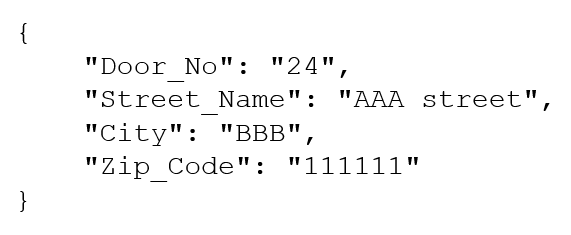
A company receives .csv files that contain physical address data. The data is in columns that have the following names: Door_No, Street_Name, City, and Zip_Code. The company wants to create a single column to store these values in the following format: Which solution will meet this requirement with the LEAST coding effort?

Exhibit 1 for question 68
  • AUse AWS Glue DataBrew to read the files. Use the NEST_TO_ARRAY transformation to create the new column.
  • BUse AWS Glue DataBrew to read the files. Use the NEST_TO_MAP transformation to create the new column. (correct answer)
  • CUse AWS Glue DataBrew to read the files. Use the PIVOT transformation to create the new column.
  • DWrite a Lambda function in Python to read the files. Use the Python data dictionary type to create the new column.
Reveal answer & explanation
Correct answer: B

The correct answer is B. Option B: Use AWS Glue DataBrew to read the files. Use the NEST_TO_MAP transformation to create the new column.

Explanation

AWS Glue is a serverless ETL and data-catalog service that prepares and integrates data.

Topic 1 Β· Question 69

A company receives call logs as Amazon S3 objects that contain sensitive customer information. The company must protect the S3 objects by using encryption. The company must also use encryption keys that only specific employees can access. Which solution will meet these requirements with the LEAST effort?

  • AUse an AWS CloudHSM cluster to store the encryption keys. Configure the process that writes to Amazon S3 to make calls to CloudHSM to encrypt and decrypt the objects. Deploy an IAM policy that restricts access to the CloudHSM cluster.
  • BUse server-side encryption with customer-provided keys (SSE-C) to encrypt the objects that contain customer information. Restrict access to the keys that encrypt the objects.
  • CUse server-side encryption with AWS KMS keys (SSE-KMS) to encrypt the objects that contain customer information. Configure an IAM policy that restricts access to the KMS keys that encrypt the objects. (correct answer)
  • DUse server-side encryption with Amazon S3 managed keys (SSE-S3) to encrypt the objects that contain customer information. Configure an IAM policy that restricts access to the Amazon S3 managed keys that encrypt the objects.
Reveal answer & explanation
Correct answer: C

The correct answer is C. Option C: Use server-side encryption with AWS KMS keys (SSE-KMS) to encrypt the objects that contain customer information. Configure an IAM policy that restricts access to the KMS keys that encrypt the objects.

Explanation

AWS IAM controls authenticated and authorized access to AWS resources with fine-grained policies. AWS KMS manages encryption keys and integrates with most AWS services for encryption at rest. AWS Config tracks resource configuration changes and evaluates compliance.

Topic 1 Β· Question 70

A company stores petabytes of data in thousands of Amazon S3 buckets in the S3 Standard storage class. The data supports analytics workloads that have unpredictable and variable data access patterns. The company does not access some data for months. However, the company must be able to retrieve all data within milliseconds. The company needs to optimize S3 storage costs. Which solution will meet these requirements with the LEAST operational overhead?

  • AUse S3 Storage Lens standard metrics to determine when to move objects to more cost-optimized storage classes. Create S3 Lifecycle policies for the S3 buckets to move objects to cost-optimized storage classes. Continue to refine the S3 Lifecycle policies in the future to optimize storage costs.
  • BUse S3 Storage Lens activity metrics to identify S3 buckets that the company accesses infrequently. Configure S3 Lifecycle rules to move objects from S3 Standard to the S3 Standard-Infrequent Access (S3 Standard-IA) and S3 Glacier storage classes based on the age of the data.
  • CUse S3 Intelligent-Tiering. Activate the Deep Archive Access tier.
  • DUse S3 Intelligent-Tiering. Use the default access tier. (correct answer)
Reveal answer & explanation
Correct answer: D

The correct answer is D. Option D: Use S3 Intelligent-Tiering. Use the default access tier.

Explanation

S3 Intelligent-Tiering automatically moves objects between tiers to optimize cost with no operational effort. Amazon S3 provides durable, scalable object storage that is fully managed.

Topic 1 Β· Question 71 Β· Select all that apply

During a security review, a company identified a vulnerability in an AWS Glue job. The company discovered that credentials to access an Amazon Redshift cluster were hard coded in the job script. A data engineer must remediate the security vulnerability in the AWS Glue job. The solution must securely store the credentials. Which combination of steps should the data engineer take to meet these requirements? (Choose two.)

  • AStore the credentials in the AWS Glue job parameters.
  • BStore the credentials in a configuration file that is in an Amazon S3 bucket.
  • CAccess the credentials from a configuration file that is in an Amazon S3 bucket by using the AWS Glue job.
  • DStore the credentials in AWS Secrets Manager. (correct answer)
  • EGrant the AWS Glue job IAM role access to the stored credentials. (correct answer)
Reveal answer & explanation
Correct answer: D, E

The correct answer is D, E. Option D: Store the credentials in AWS Secrets Manager. Option E: Grant the AWS Glue job IAM role access to the stored credentials.

Explanation

AWS Glue is a serverless ETL and data-catalog service that prepares and integrates data. An IAM role grants temporary, least-privilege permissions to AWS resources without long-term credentials. AWS IAM controls authenticated and authorized access to AWS resources with fine-grained policies.

Topic 1 Β· Question 72

A data engineer uses Amazon Redshift to run resource-intensive analytics processes once every month. Every month, the data engineer creates a new Redshift provisioned cluster. The data engineer deletes the Redshift provisioned cluster after the analytics processes are complete every month. Before the data engineer deletes the cluster each month, the data engineer unloads backup data from the cluster to an Amazon S3 bucket. The data engineer needs a solution to run the monthly analytics processes that does not require the data engineer to manage the infrastructure manually. Which solution will meet these requirements with the LEAST operational overhead?

  • AUse Amazon Step Functions to pause the Redshift cluster when the analytics processes are complete and to resume the cluster to run new processes every month.
  • BUse Amazon Redshift Serverless to automatically process the analytics workload. (correct answer)
  • CUse the AWS CLI to automatically process the analytics workload.
  • DUse AWS CloudFormation templates to automatically process the analytics workload.
Reveal answer & explanation
Correct answer: B

The correct answer is B. Option B: Use Amazon Redshift Serverless to automatically process the analytics workload.

Explanation

Amazon Redshift is a managed petabyte-scale data warehouse for complex analytical queries.

Topic 1 Β· Question 73

A company receives a daily file that contains customer data in .xls format. The company stores the file in Amazon S3. The daily file is approximately 2 GB in size. A data engineer concatenates the column in the file that contains customer first names and the column that contains customer last names. The data engineer needs to determine the number of distinct customers in the file. Which solution will meet this requirement with the LEAST operational effort?

  • ACreate and run an Apache Spark job in an AWS Glue notebook. Configure the job to read the S3 file and calculate the number of distinct customers.
  • BCreate an AWS Glue crawler to create an AWS Glue Data Catalog of the S3 file. Run SQL queries from Amazon Athena to calculate the number of distinct customers.
  • CCreate and run an Apache Spark job in Amazon EMR Serverless to calculate the number of distinct customers.
  • DUse AWS Glue DataBrew to create a recipe that uses the COUNT_DISTINCT aggregate function to calculate the number of distinct customers. (correct answer)
Reveal answer & explanation
Correct answer: D

The correct answer is D. Option D: Use AWS Glue DataBrew to create a recipe that uses the COUNT_DISTINCT aggregate function to calculate the number of distinct customers.

Explanation

AWS Glue is a serverless ETL and data-catalog service that prepares and integrates data.

Topic 1 Β· Question 74

A healthcare company uses Amazon Kinesis Data Streams to stream real-time health data from wearable devices, hospital equipment, and patient records. A data engineer needs to find a solution to process the streaming data. The data engineer needs to store the data in an Amazon Redshift Serverless warehouse. The solution must support near real-time analytics of the streaming data and the previous day's data. Which solution will meet these requirements with the LEAST operational overhead?

  • ALoad data into Amazon Kinesis Data Firehose. Load the data into Amazon Redshift.
  • BUse the streaming ingestion feature of Amazon Redshift. (correct answer)
  • CLoad the data into Amazon S3. Use the COPY command to load the data into Amazon Redshift.
  • DUse the Amazon Aurora zero-ETL integration with Amazon Redshift.
Reveal answer & explanation
Correct answer: B

The correct answer is B. Option B: Use the streaming ingestion feature of Amazon Redshift.

Explanation

Amazon Redshift is a managed petabyte-scale data warehouse for complex analytical queries.

Topic 1 Β· Question 75 Β· Select all that apply

A data engineer needs to use an Amazon QuickSight dashboard that is based on Amazon Athena queries on data that is stored in an Amazon S3 bucket. When the data engineer connects to the QuickSight dashboard, the data engineer receives an error message that indicates insufficient permissions. Which factors could cause to the permissions-related errors? (Choose two.)

  • AThere is no connection between QuickSight and Athena.
  • BThe Athena tables are not cataloged.
  • CQuickSight does not have access to the S3 bucket. (correct answer)
  • DQuickSight does not have access to decrypt S3 data. (correct answer)
  • EThere is no IAM role assigned to QuickSight.
Reveal answer & explanation
Correct answer: C, D

The correct answer is C, D. Option C: QuickSight does not have access to the S3 bucket. Option D: QuickSight does not have access to decrypt S3 data.

Explanation

Amazon S3 provides durable, scalable object storage that is fully managed. Amazon QuickSight is a serverless business-intelligence and dashboard service.

Topic 1 Β· Question 76

A company stores datasets in JSON format and .csv format in an Amazon S3 bucket. The company has Amazon RDS for Microsoft SQL Server databases, Amazon DynamoDB tables that are in provisioned capacity mode, and an Amazon Redshift cluster. A data engineering team must develop a solution that will give data scientists the ability to query all data sources by using syntax similar to SQL. Which solution will meet these requirements with the LEAST operational overhead?

  • AUse AWS Glue to crawl the data sources. Store metadata in the AWS Glue Data Catalog. Use Amazon Athena to query the data. Use SQL for structured data sources. Use PartiQL for data that is stored in JSON format. (correct answer)
  • BUse AWS Glue to crawl the data sources. Store metadata in the AWS Glue Data Catalog. Use Redshift Spectrum to query the data. Use SQL for structured data sources. Use PartiQL for data that is stored in JSON format.
  • CUse AWS Glue to crawl the data sources. Store metadata in the AWS Glue Data Catalog. Use AWS Glue jobs to transform data that is in JSON format to Apache Parquet or .csv format. Store the transformed data in an S3 bucket. Use Amazon Athena to query the original and transformed data from the S3 bucket.
  • DUse AWS Lake Formation to create a data lake. Use Lake Formation jobs to transform the data from all data sources to Apache Parquet format. Store the transformed data in an S3 bucket. Use Amazon Athena or Redshift Spectrum to query the data.
Reveal answer & explanation
Correct answer: A

The correct answer is A. Option A: Use AWS Glue to crawl the data sources. Store metadata in the AWS Glue Data Catalog. Use Amazon Athena to query the data. Use SQL for structured data sources. Use PartiQL for data that is stored in JSON format.

Explanation

Amazon Athena runs serverless SQL queries directly on data in Amazon S3 with no infrastructure to manage. AWS Glue is a serverless ETL and data-catalog service that prepares and integrates data.

Topic 1 Β· Question 77

A data engineer is configuring Amazon SageMaker Studio to use AWS Glue interactive sessions to prepare data for machine learning (ML) models. The data engineer receives an access denied error when the data engineer tries to prepare the data by using SageMaker Studio. Which change should the engineer make to gain access to SageMaker Studio?

  • AAdd the AWSGlueServiceRole managed policy to the data engineer's IAM user.
  • BAdd a policy to the data engineer's IAM user that includes the sts:AssumeRole action for the AWS Glue and SageMaker service principals in the trust policy. (correct answer)
  • CAdd the AmazonSageMakerFullAccess managed policy to the data engineer's IAM user.
  • DAdd a policy to the data engineer's IAM user that allows the sts:AddAssociation action for the AWS Glue and SageMaker service principals in the trust policy.
Reveal answer & explanation
Correct answer: B

The correct answer is B. Option B: Add a policy to the data engineer's IAM user that includes the sts:AssumeRole action for the AWS Glue and SageMaker service principals in the trust policy.

Explanation

AWS Glue is a serverless ETL and data-catalog service that prepares and integrates data. Amazon SageMaker builds, trains and deploys machine learning models in a fully managed service. AWS IAM controls authenticated and authorized access to AWS resources with fine-grained policies.

Topic 1 Β· Question 78

A company extracts approximately 1 TB of data every day from data sources such as SAP HANA, Microsoft SQL Server, MongoDB, Apache Kafka, and Amazon DynamoDB. Some of the data sources have undefined data schemas or data schemas that change. A data engineer must implement a solution that can detect the schema for these data sources. The solution must extract, transform, and load the data to an Amazon S3 bucket. The company has a service level agreement (SLA) to load the data into the S3 bucket within 15 minutes of data creation. Which solution will meet these requirements with the LEAST operational overhead?

  • AUse Amazon EMR to detect the schema and to extract, transform, and load the data into the S3 bucket. Create a pipeline in Apache Spark.
  • BUse AWS Glue to detect the schema and to extract, transform, and load the data into the S3 bucket. Create a pipeline in Apache Spark. (correct answer)
  • CCreate a PySpark program in AWS Lambda to extract, transform, and load the data into the S3 bucket.
  • DCreate a stored procedure in Amazon Redshift to detect the schema and to extract, transform, and load the data into a Redshift Spectrum table. Access the table from Amazon S3.
Reveal answer & explanation
Correct answer: B

The correct answer is B. Option B: Use AWS Glue to detect the schema and to extract, transform, and load the data into the S3 bucket. Create a pipeline in Apache Spark.

Explanation

Amazon S3 provides durable, scalable object storage that is fully managed. AWS Glue is a serverless ETL and data-catalog service that prepares and integrates data.

Topic 1 Β· Question 79

A company has multiple applications that use datasets that are stored in an Amazon S3 bucket. The company has an ecommerce application that generates a dataset that contains personally identifiable information (PII). The company has an internal analytics application that does not require access to the PII. To comply with regulations, the company must not share PII unnecessarily. A data engineer needs to implement a solution that with redact PII dynamically, based on the needs of each application that accesses the dataset. Which solution will meet the requirements with the LEAST operational overhead?

  • ACreate an S3 bucket policy to limit the access each application has. Create multiple copies of the dataset. Give each dataset copy the appropriate level of redaction for the needs of the application that accesses the copy.
  • BCreate an S3 Object Lambda endpoint. Use the S3 Object Lambda endpoint to read data from the S3 bucket. Implement redaction logic within an S3 Object Lambda function to dynamically redact PII based on the needs of each application that accesses the data. (correct answer)
  • CUse AWS Glue to transform the data for each application. Create multiple copies of the dataset. Give each dataset copy the appropriate level of redaction for the needs of the application that accesses the copy.
  • DCreate an API Gateway endpoint that has custom authorizers. Use the API Gateway endpoint to read data from the S3 bucket. Initiate a REST API call to dynamically redact PII based on the needs of each application that accesses the data.
Reveal answer & explanation
Correct answer: B

The correct answer is B. Option B: Create an S3 Object Lambda endpoint. Use the S3 Object Lambda endpoint to read data from the S3 bucket. Implement redaction logic within an S3 Object Lambda function to dynamically redact PII based on the needs of eac...

Explanation

AWS Lambda runs code without provisioning servers and scales automatically, which minimizes operational overhead. Amazon S3 provides durable, scalable object storage that is fully managed.

Topic 1 Β· Question 80

A data engineer needs to build an extract, transform, and load (ETL) job. The ETL job will process daily incoming .csv files that users upload to an Amazon S3 bucket. The size of each S3 object is less than 100 MB. Which solution will meet these requirements MOST cost-effectively?

  • AWrite a custom Python application. Host the application on an Amazon Elastic Kubernetes Service (Amazon EKS) cluster.
  • BWrite a PySpark ETL script. Host the script on an Amazon EMR cluster.
  • CWrite an AWS Glue PySpark job. Use Apache Spark to transform the data.
  • DWrite an AWS Glue Python shell job. Use pandas to transform the data. (correct answer)
Reveal answer & explanation
Correct answer: D

The correct answer is D. Option D: Write an AWS Glue Python shell job. Use pandas to transform the data.

Explanation

AWS Glue is a serverless ETL and data-catalog service that prepares and integrates data. This option delivers the requirement at the lowest cost.

Showing questions 61–80 of 313 Β· Page 4 of 16